
Drill Canes of The Royal Canadian Regiment
This article originally appeared in the 2022 edition of “Pro Patria”, The RCR’s annual journal.
Maj R.J.S. Law
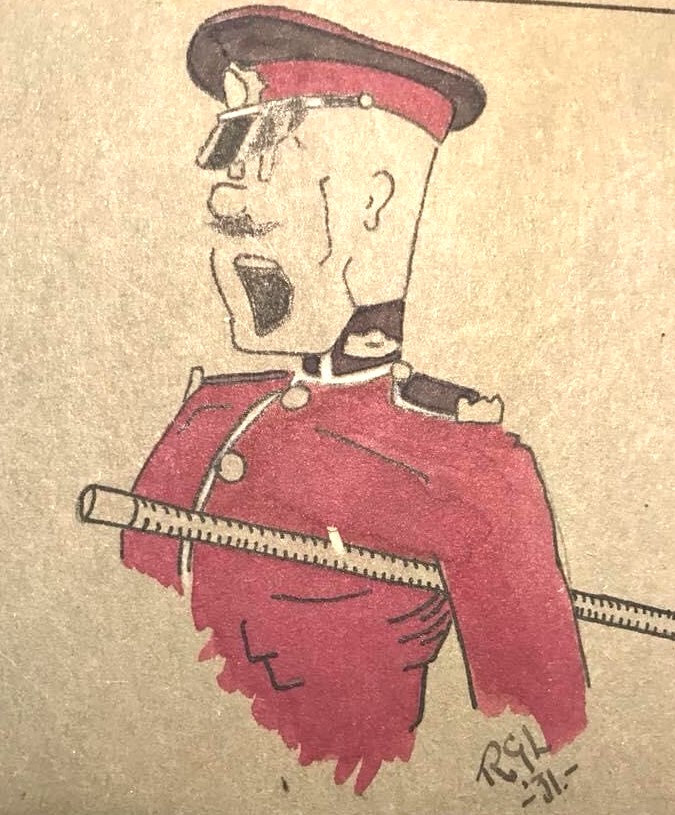
Much like swagger sticks[1] which were a vogue item of dress among the upper class at the turn of the 19th century, canes were equally a fashionable accessory both with civilians and as a symbol of authority within the military. It makes sense that the use of canes for the military was formally acknowledged through Drill Canes. Unlike swagger sticks; however, the drill cane was longer, measuring generally 36 inches and 1 inch wide, resulting in a more stout accessory and visible symbol of authority.
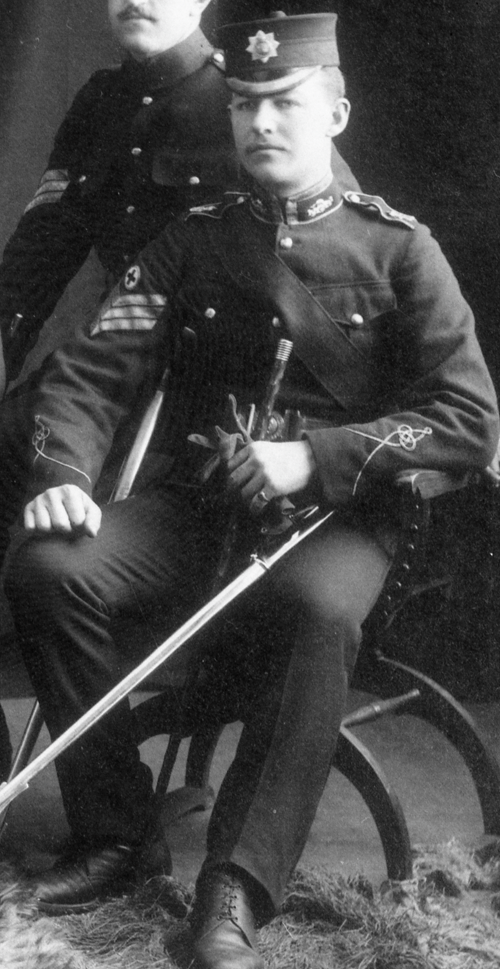
While The RCR has essentially foregone Non-Commissioned Officer’s drill canes for the ever so popular pace stick, our Regiment was no stranger to such accoutrements. The first documented passing of the drill cane can be found in the 1920 Regimental Standing Orders under the Walking Out Order of Dress where it states NCOs will carry drill canes[2], although the 1884 and 1887 Infantry School Corps Standing Orders do state that NCOs could carry light sticks or canes in public,[3] but it does not specifically mention Drill Canes. Similarly, the 1935 version of Standing Orders reads “Non-Commissioned Officers of and above the rank of Serjeant (sic) will wear side arms and carry a drill cane.” The Spring-Summer edition of the 1953 Connecting File, even mentions WO2 (equivalent now to an MWO) R.W. Bennett “wielding the CSMS’s Cane” as he assumed the position of Coy HQ Sergeant Major in Korea.[4]
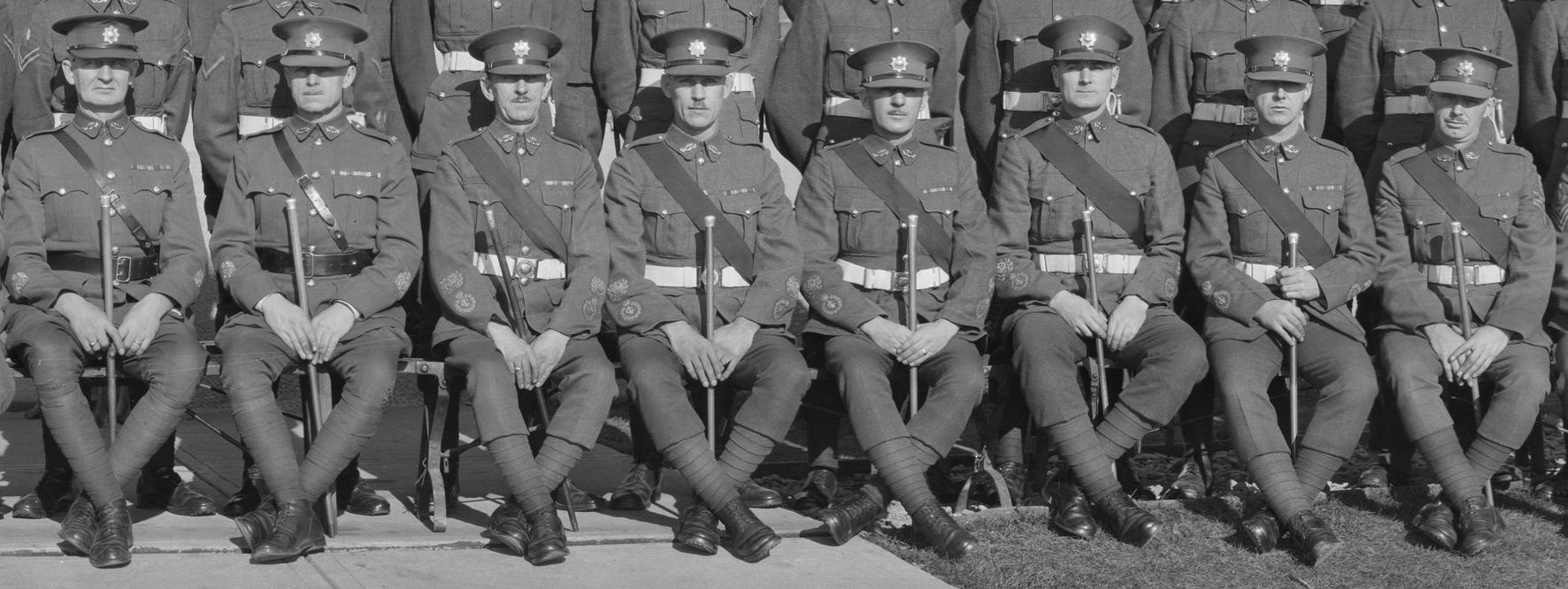
While the Standing Orders of the 2nd Battalion, dated 1953 are the first to mention a Regimental pattern drill cane for NCOs[5], examples show many variations dating to the Victorian era. In 1960, the first mention of pace sticks appears stating “all Warrant Officers (now equivalent to MWO and CWO) will carry regulation ordnance pattern pace sticks unless otherwise ordered”, it then states “all Senior Non-Commissioned Officers will carry a drill cane which will be sand coloured malacca, approximately 1 in in diameter and 36 inches long with a white metal ferrule and knob. Reproduction of the cap badge on the knob will be 7/8 inch in diameter. The ferrule will be 1 inch in length and the knob 2 ½ inches. The cane will be 1 inch in diameter at the knob and taper to ¾ inch at the ferrule.”[6] The same statement is reiterated in the 1967 RSOs, but in the 1970 and up to the 2016 version, while Drill Canes are listed in the table of content, it only states “all warrant officers and senior non-commissioned officers shall carry issue pace sticks.”[7] Yet Drill Canes were not only reserved for the symbolic meaning of a positional staff, but also as awards as hinted when Sgt Peter Roberts of the Regimental band received a drill cane for topping the Junior NCO course in 1963.[8]
It seems logical for the Infantry to use a pace stick vice a Drill Cane as it has a practical purpose for parades, but the stick has now outpaced the cane on a little known fact of Regimental history few are aware of.

[1] See Pro Patria issue 96, 2014. https://milart.blog/2014/12/09/swagger-sticks-of-the-royal-canadian-regiment/
[2] 1920 Regimental Standing Orders, The Royal Canadian Regiment.
[3] Standing Orders of the Infantry School Corps, 1884
[4] Connecting File, Spring-Summer 1953
[5] Standing Orders, 2nd Battalion, The Royal Canadian Regiment, 1953.
[6] Chapter 2, Dress Regulations, Standing Orders, The Royal Canadian Regiment, 1960.
[7] The Royal Canadian Regiment, Regimental Standing Orders 1970, and 1976.
[8] Connecting File, Vol XXXIV No.1, 1963, p. 36
 CSMMI MILART